Why Sitting Comfort Slowly Disappears
A closer look at why so many people quietly grow uncomfortable at their own desks, what actually causes it, and what a small ergonomic change can honestly do about it.
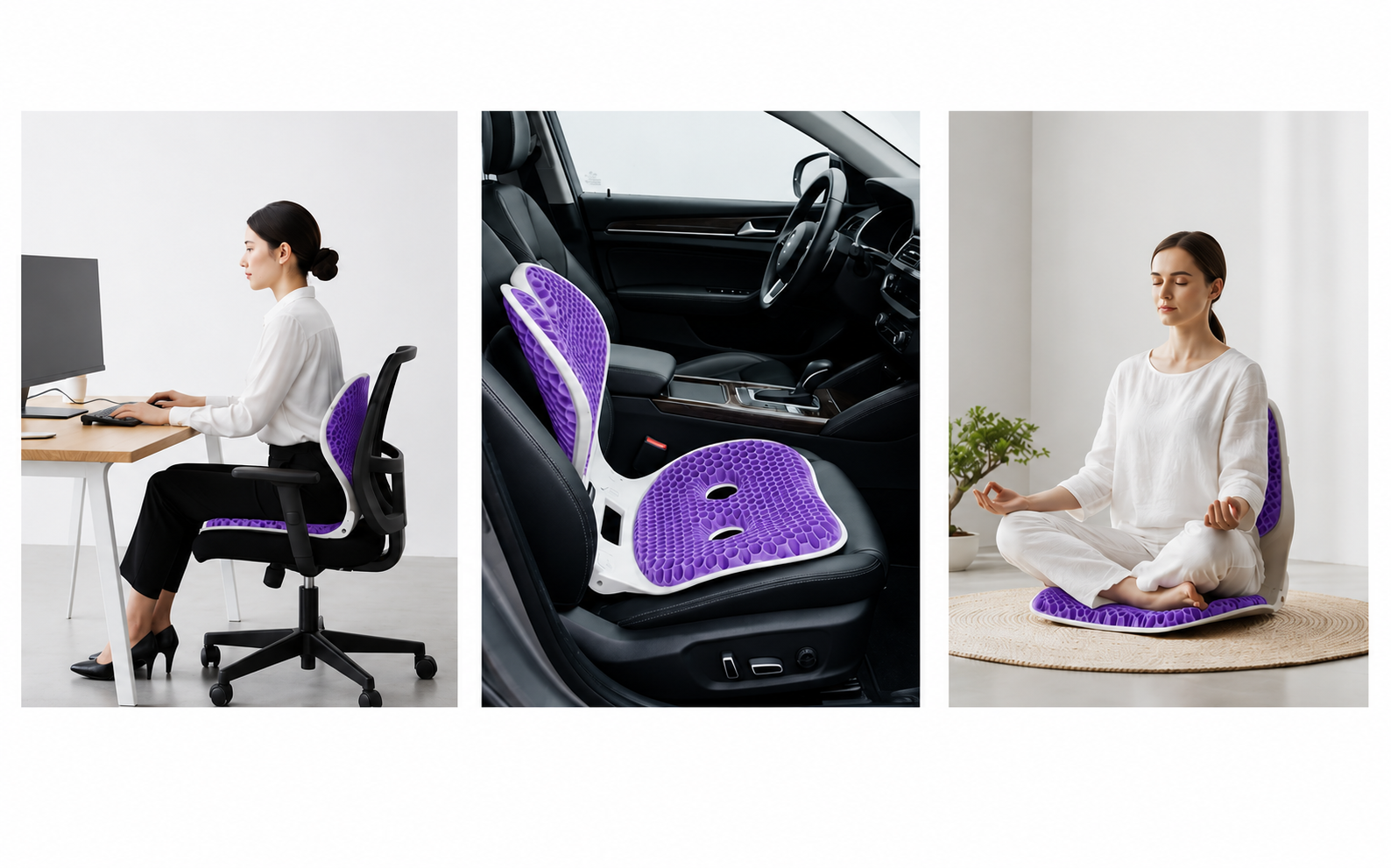
Part One
It rarely arrives all at once
Sitting discomfort is easy to ignore because it creeps in slowly. A stiff neck after a long call. A heavier lower back by late afternoon. Standing up takes an extra beat.
Almost no one links those small signals to hours spent in a chair that was never really designed for their body.
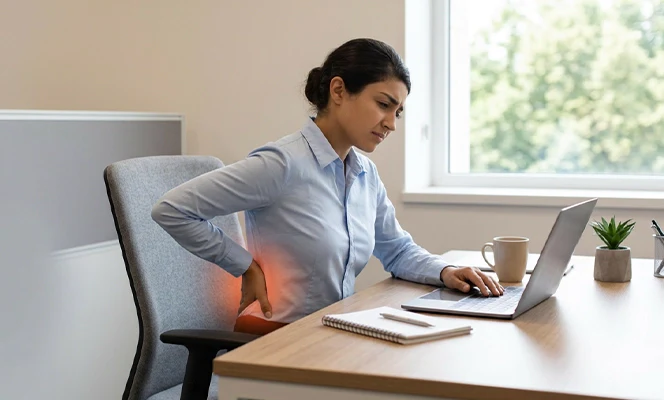
Part Two
The small habits that quietly add up
Most discomfort comes from a handful of small, entirely reasonable habits repeated for hundreds of hours.
Same position, hours on end
Two or three hours without shifting weight.
Room-first setup
A workstation built for the space, not the body in it.
Slouch when focused
Concentration takes over, posture quietly gives way.
Signals ignored
The first quiet stiffness dismissed because the day is busy.
Expert Insight
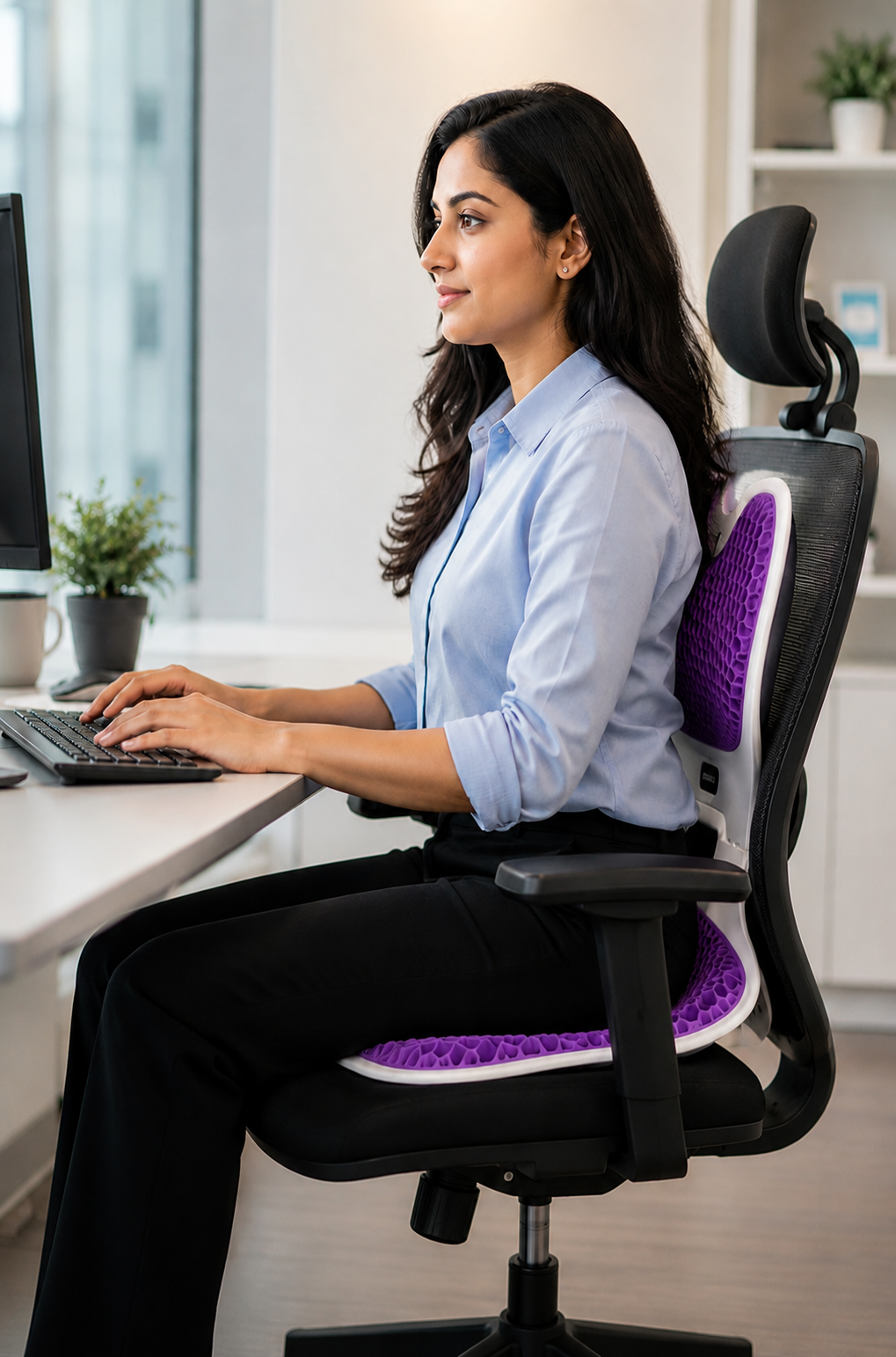
Most posture problems are not about willpower. They are about the surface people spend eight hours a day on, and whether it gives the spine somewhere sensible to rest.
Editorial Commentary
The Ergonomic Review Desk
What sits between the body and the chair often matters as much as the chair itself.
Part Three
A good chair is only half the answer
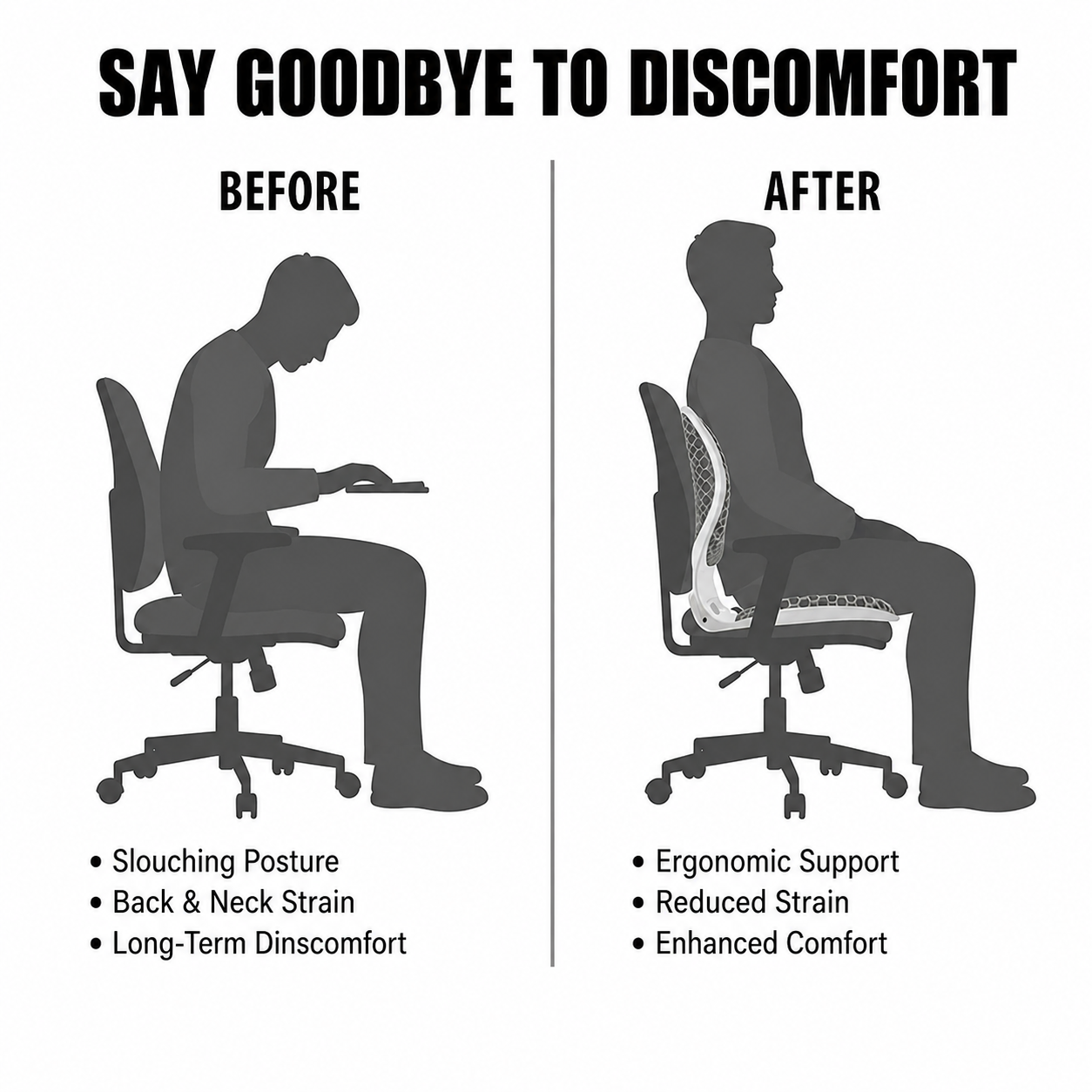
Even a well made chair leaves gaps. It rarely distributes pressure evenly across the seat. It does not always guide the lower spine into a comfortable curve. And when the day gets warm, most upholstery does not breathe.
Ergonomic accessories exist to close those specific gaps. The good ones are shaped around three ideas: how weight is spread, how the lumbar is supported, and how air moves through the surface.
These are small changes on paper. In practice they are the difference between finishing the day tired and finishing the day sore.
Editorial Review
A closer look at Posture Max Pro
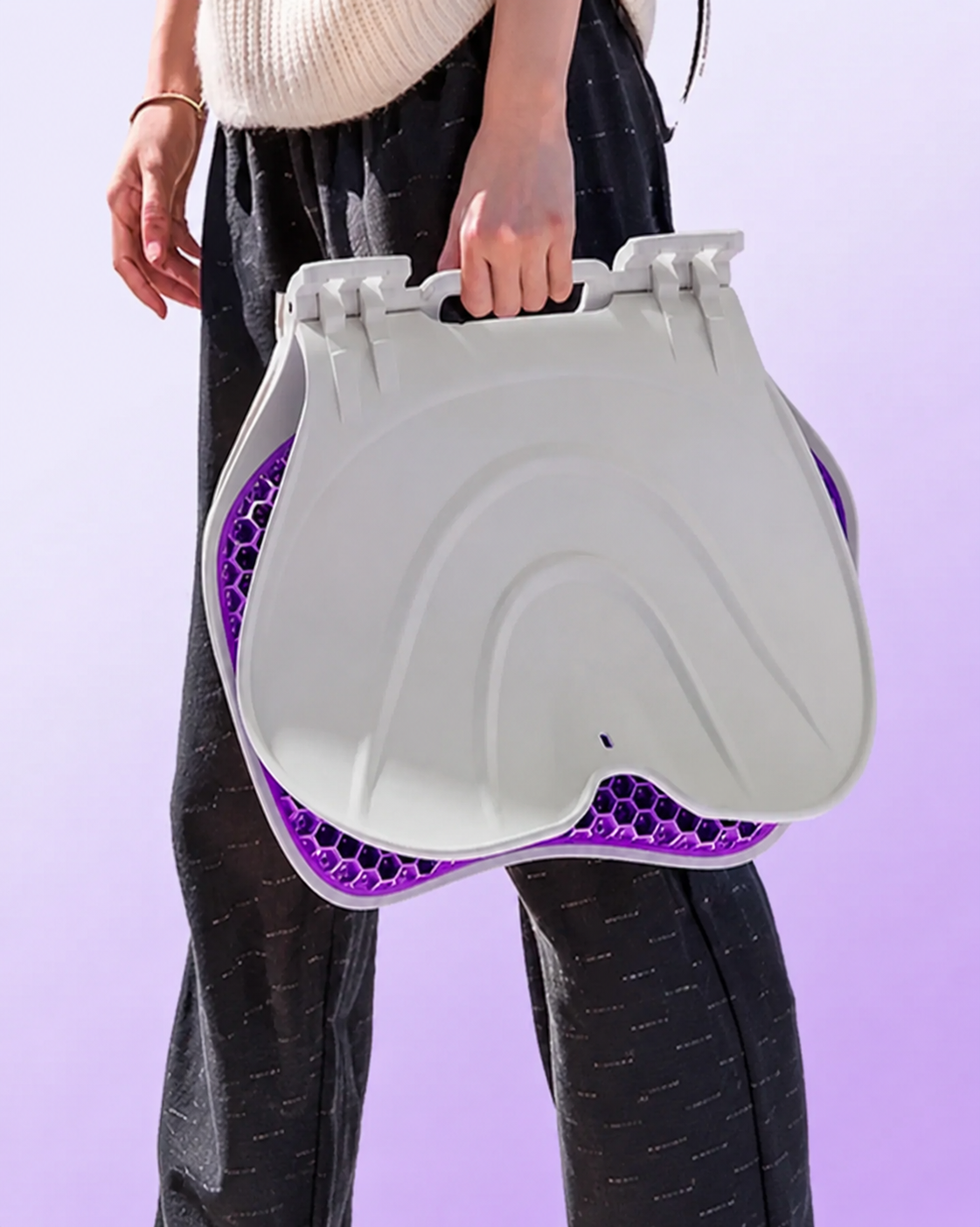
A foldable seat cushion with an integrated back support, built from a honeycomb TPE structure on a silicone base. We kept reaching for it without thinking, usually a good sign.
Design
Foldable, low profile, quietly modern
Comfort
Even pressure across seat and lower back
Portability
Folds into a laptop bag with room to spare
Build quality
Recovers shape after every use
Part Four
The people who tend to notice the difference
The readers who feel it most share one thing. They sit for long, uninterrupted stretches.
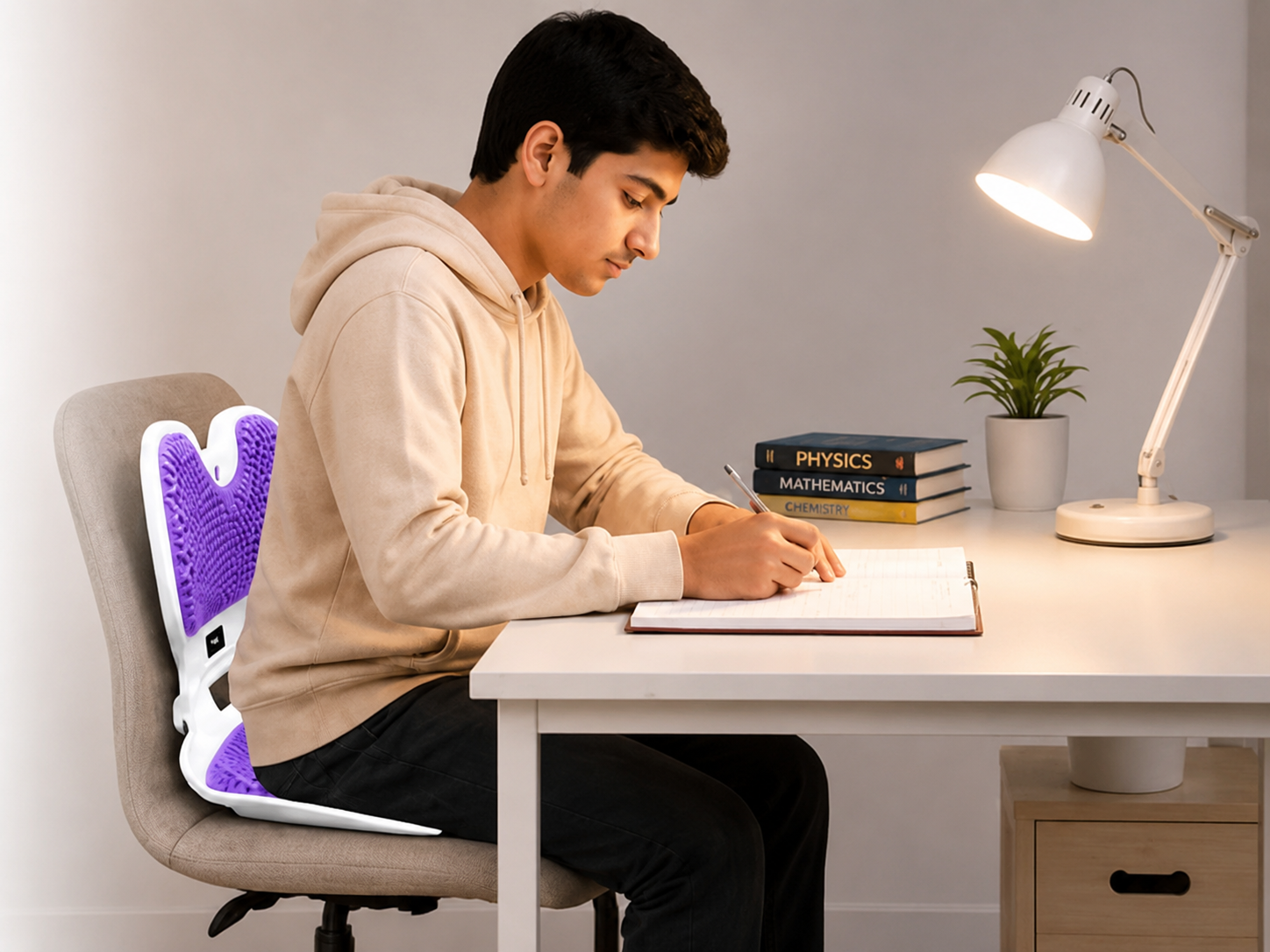 Students
Long study blocks quietly turn into stiffness.
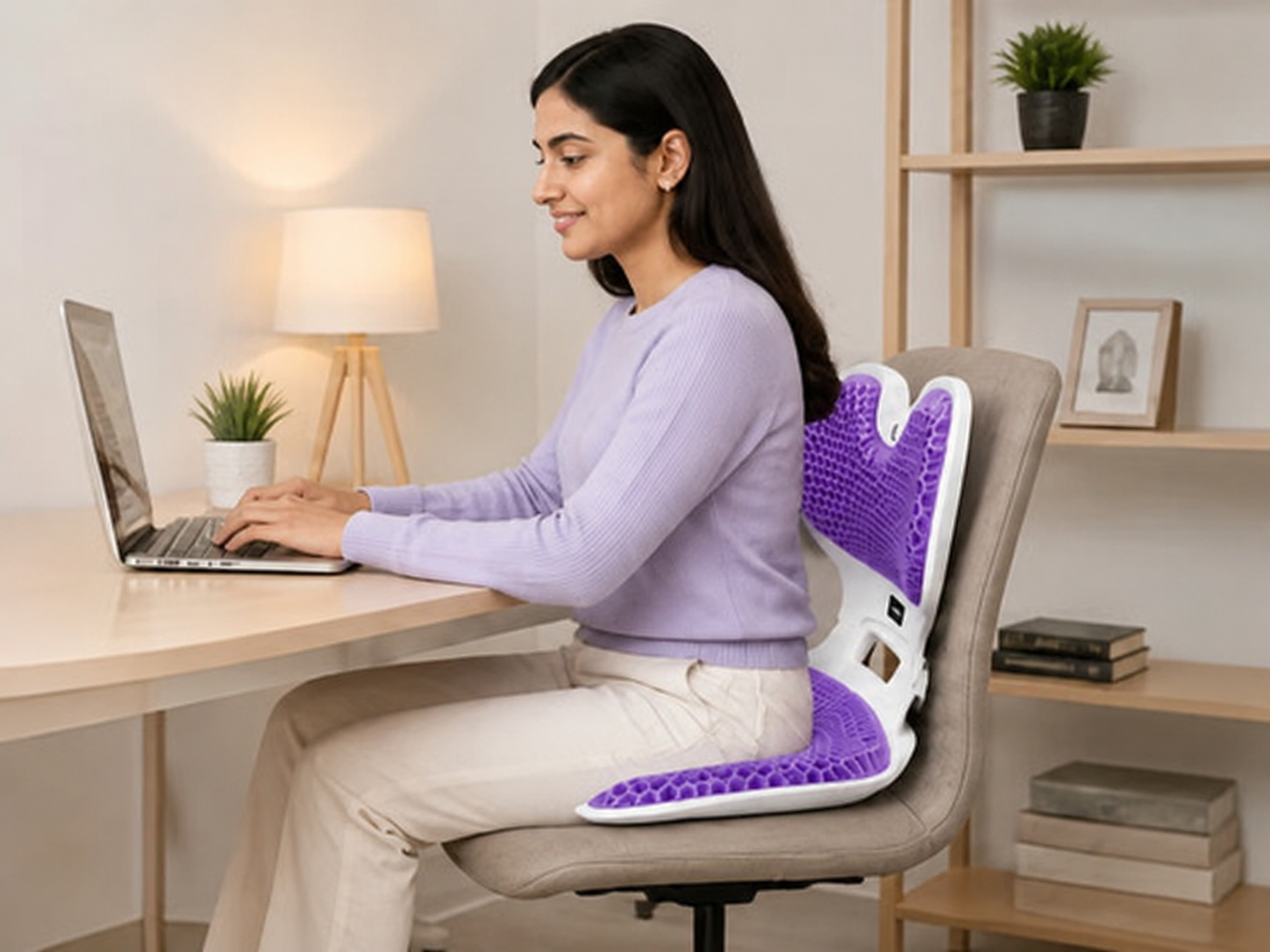 Remote workers
Home chairs rarely fit a full workday.
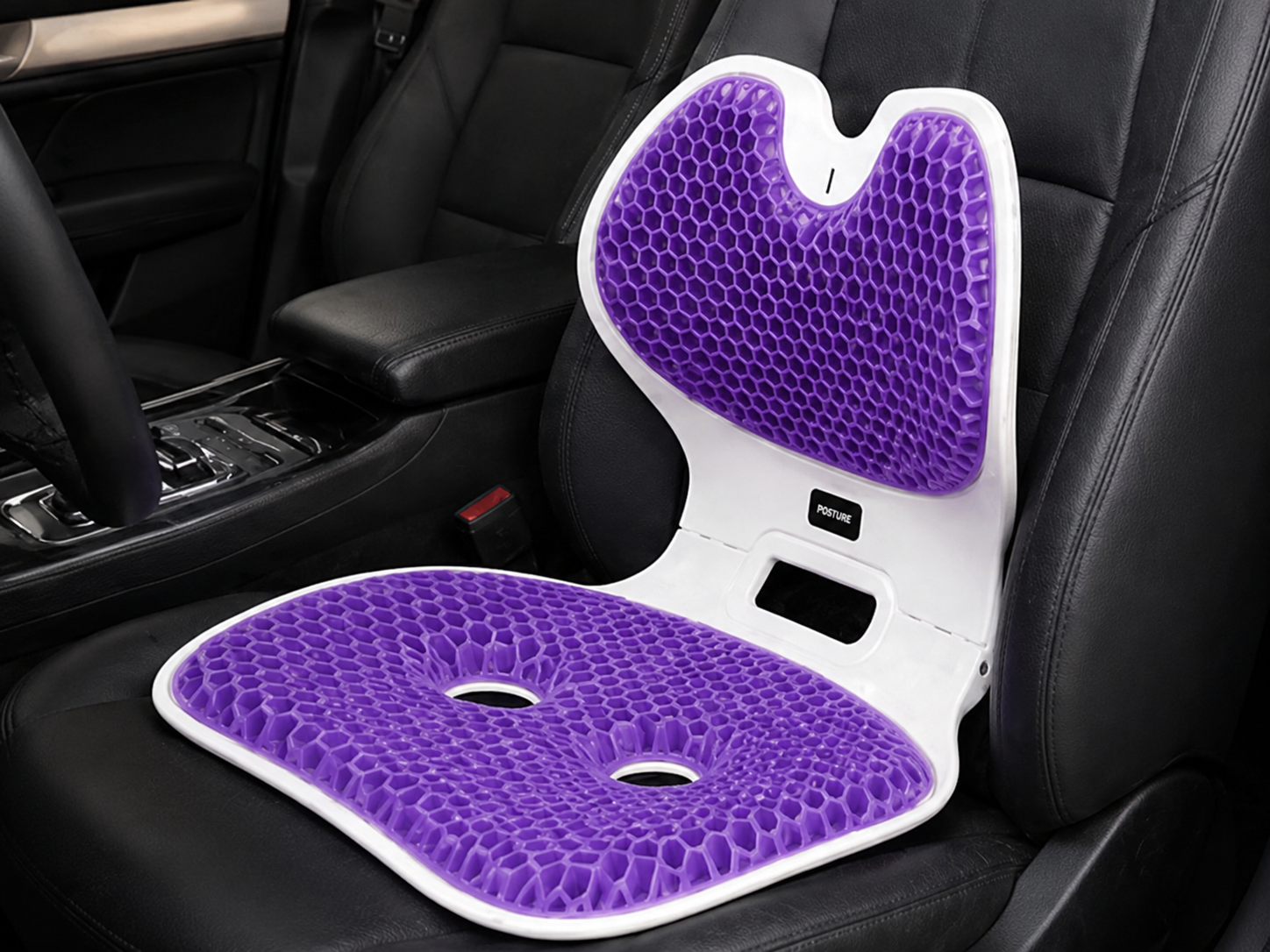 Drivers & travellers
Real hours in a car seat make the difference obvious.
What actually stood out
Four qualities readers keep pointing to
Comfort that lasts
By hour six the surface still feels supportive, not compressed.
Spine can settle
A subtle lumbar shape that guides without pushing forward.
Air moves through
The honeycomb lets the seat breathe on long stretches.
Folds and travels
Slips into a laptop bag, then back onto any chair.
From Our Readers
What people who bought it tell us
Two weeks in and I end the day noticeably less stiff. Just a quieter body.
Ananya R.
Product manager, 32
Twelve hour shifts and the surface still breathes. Worth keeping.
Vikram S.
Cab driver, 44
Turned my basic chair into something I can actually write on for hours.
Meera P.
Postgraduate student, 24
The foldable part sold me. Comes with me in the laptop bag.
Rohit K.
Software engineer, 29
Reader Questions
The questions readers actually ask
Yes. It is shaped to sit on flat and lightly contoured surfaces, which covers most office, dining, gaming, and car seats. Deeply bucketed racing seats are the main exception.
A soft cloth with mild soapy water is usually enough. The TPE and silicone construction rinses clean and air dries in a few minutes.
The seat folds flat and slides into a laptop bag or backpack. Regular readers use one at the desk and keep a second in the car.
The cellular structure is designed to recover its shape after every use. Readers who have used ours for a year report the surface still feels the same as week one.
Folded, it slips behind a monitor, into a drawer, or under a car seat. It does not take up meaningful space.
It is rated for daily use up to 150 kg. That covers almost every adult body type comfortably.
It is one of the more common use cases we hear about. Drivers report less lower back fatigue on longer routes.
Yes, the base is stable enough for floor use during meditation or short work sessions on a low table.
Final Thoughts
A quiet upgrade that earns its keep
Sitting comfort is one of those things people rarely think about until it starts to slip. By then it has usually been slipping for a while.
Of the ergonomic seats we spent real time with, Posture Max Pro was the one we kept using without thinking about it. It is not the loudest option in the category, and it does not need to be. It supports the spine, breathes through long hours, and folds away when the day is done.
For readers looking for a practical, everyday improvement to their sitting hours, it is an easy one to recommend.